
Composition
To ensure your video is visually appealing to viewers, it’s essential to adhere to composition rules. The primary goal of applying these rules is to direct the viewer’s attention effectively.
Composition Rules
In this video, we’ll discuss the following composition rules:

- The Rule of Third
- Balance in the Frame
- Distracting Elements
- Depth of Field
In our style of videos—Vertical and Full Portrait—it’s clear where the viewer’s attention should be: on you. However, it’s not as simple as placing yourself in the middle of the video, as it may appear unprofessional and be irritating to viewers.
The Rule of Thirds
The Rule of Thirds involves dividing the frame into thirds both vertically and horizontally. This creates a grid, with the lines representing areas of attention. When composing according to this rule, the most important elements should align with these grid lines. For example, placing the eyes along one of the horizontal lines draws the viewer’s gaze to the speaker’s eyes.
When adding captions, it’s best to position them along the lower grid line. However, it’s essential to consider different platform dimensions, as videos may be displayed differently across various platforms.

Adjusting Composition for Different Platforms

For example, when you create a 9:16 vertical video, it may not display fully on Facebook’s timeline, which uses a 3:4 aspect ratio. This means that the lower half of the video won’t be visible to Facebook users unless they open the Reels feed.
In such cases, we need to consider adjusting our composition. Since many Facebook users view videos on their timeline, it’s crucial to ensure that the most important elements are visible. Anything marked in red won’t be seen in the timeline.
Let me demonstrate with the following images. So, how do we adjust the composition? We’ll need to create a different grid that applies only to the part visible in the Facebook Timeline.
This adjustment ensures that in Reel feed, Shorts, and TikTok, the focus remains on the face, which is essential for engaging viewers.
See the gridline illustration and subject positioning on the full Facebook Reel Layout and the Reel Layout that is shown in the Facebook Timeline.
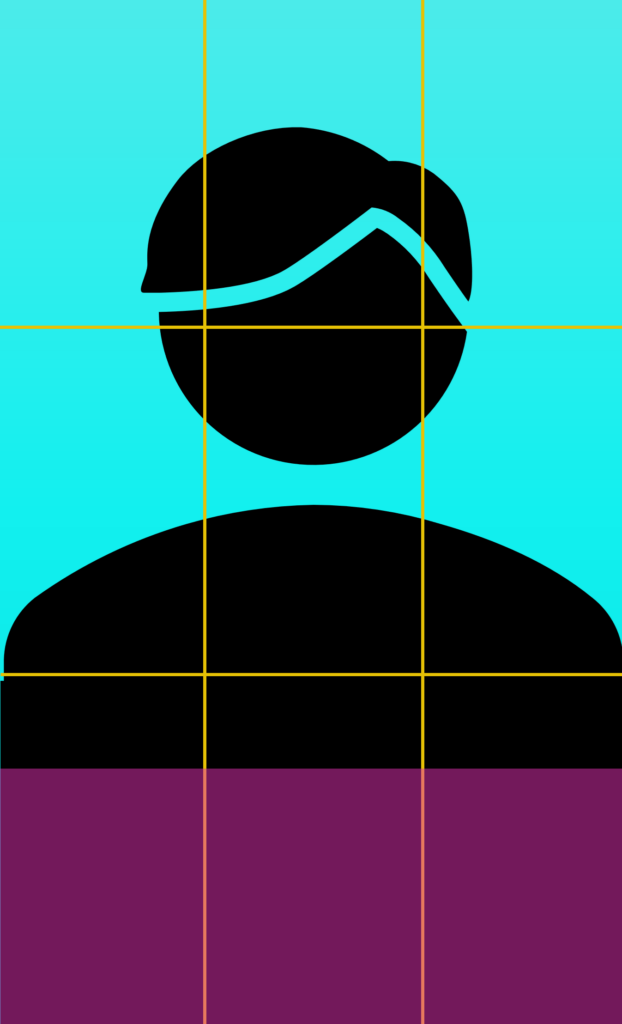
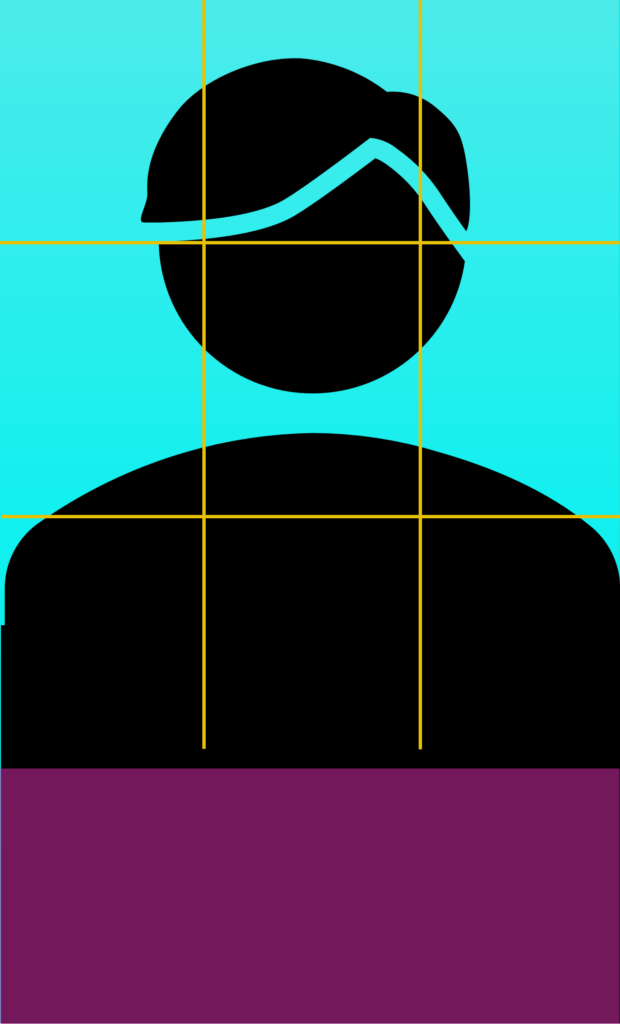
The below image illustrates how the adjusted video will appear in the Reel Feed, where the top grid line will be meeting the speaker’s mouth. This means that viewers will look into the mouth of the speaker literally – it adds dynamism to the picture.

But if you’re using hand gestures with only one hand to demonstrate something, it’s sometimes acceptable to position the object along one of the vertical lines, as shown in Image 6.
However, in such cases, you may need to apply additional composition rules to balance the image.

Additional Composition Rules
In addition to the Rule of Thirds, other composition rules address balance within the frame, handling distracting elements, and controlling depth of field.
- Balance in the Frame: Ensures visual equilibrium by balancing elements on either side of the frame, particularly when positioning yourself off-center.

- Distracting Elements: Identifies and manages elements that divert attention from the main subject, such as objects growing out of your head.

- Depth of Field: Utilizes blur to minimize distractions in the background, keeping the viewer’s focus on the subject.

No-Cutting-the-Head Rule
Lastly, remember the importance of not cutting off your head in the frame, as it can disrupt the visual flow of the video.

By understanding and applying these composition rules, you can create visually engaging videos that captivate your audience effectively.
To simplify the process, consider using a plain background and focusing on a few essential objects in the frame, such as yourself and illustrations.
See you in the next video, where we’ll delve into lighting techniques to enhance your videos further.